Bonds Explained: A Beginner’s Guide to Investing in Fixed Income Securities
When people think about investing, stocks usually get most of the attention. However, bonds have been a cornerstone of wealth-building and portfolio management for centuries. They provide income, stability, and diversification that stocks often cannot.
Whether you’re saving for retirement, preserving capital, or seeking predictable income, understanding bonds is essential.
This guide explains everything beginners need to know about bonds, including how they work, their risks, potential returns, where to buy them, and how they fit into an investment strategy.
What Is a Bond?
A bond is essentially a loan made by an investor to a borrower.
When you buy a bond, you’re lending money to a government, municipality, corporation, or other organization. In exchange, the issuer agrees to:
- Pay you interest at regular intervals.
- Return your original investment (principal) at a specified maturity date.
Think of a bond as an IOU between an investor and an issuer.
How Bonds Work
Here’s a simple example:
You purchase a bond for $1,000 with:
- 5% annual interest rate (coupon rate)
- 10-year maturity
The issuer pays:
- $50 per year in interest
- $1,000 principal at maturity
Over 10 years:
- Interest earned: $500
- Principal returned: $1,000
- Total received: $1,500
Key Bond Terms Every Investor Should Know
Face Value (Par Value)
The face value, also called par value, is the amount the bond issuer promises to repay at maturity. It is the bond’s principal amount, not the total amount you will receive over the life of the bond.
Detailed Example:
Suppose a company issues a bond with:
- Face value = $1,000
- Coupon rate = 4%
- Maturity = 5 years
That means:
- The company will pay $40 per year in interest (4% of $1,000)
- At the end of 5 years, the company will repay the $1,000 face value
If you hold the bond until maturity, your total cash received would be:
- Interest: $40 × 5 years = $200
- Principal repaid: $1,000
- Total received: $1,200
So to answer the question directly:
- Face value = principal
- Total received = principal + interest
Important Note:
A bond’s market price may be different from its face value.
For example:
- If you buy the bond for $950, you are buying it at a discount.
- If you buy it for $1,050, you are buying it at a premium.
Even though the face value remains $1,000, the amount you pay in the market can vary.
Example:
- Face value = $1,000
- Purchase price = $950
- Interest received over time = $200
- Principal repaid at maturity = $1,000
In this case, your total return is based on both the interest earned and the $50 gain from buying below face value.
Coupon Rate
The annual interest paid as a percentage of face value.
Example:
- 4% coupon on $1,000
- Annual interest = $40
Maturity Date
The date the bond issuer repays the principal.
Common maturities include:
- Short-term: 1–3 years
- Intermediate-term: 3–10 years
- Long-term: 10–30 years
Yield
Yield represents the bond’s actual return based on its current market price.
Bond prices and yields move in opposite directions:
- Prices rise → yields fall
- Prices fall → yields rise
Example:
Suppose a bond has:
- Face value = $1,000
- Coupon payment = $50 per year
- Current market price = $900
The bond still pays $50 annually, but because you only paid $900 for it, your yield is higher than the coupon rate.
In this case:
- Coupon rate = 5%
- Current yield = $50 ÷ $900 = 5.56%
This means the bond is generating a return of 5.56% based on the price you paid, even though its coupon rate is 5%.
Types of Bonds
1. Government Bonds
Issued by national governments.
Examples include:
- U.S. Treasury Bonds
- Treasury Notes
- Treasury Bills
Advantages:
- High safety
- Backed by government credit
Disadvantages:
- Lower returns compared to riskier bonds
2. Municipal Bonds
Issued by states, cities, and local governments.
Benefits:
- Often exempt from federal taxes
- Relatively stable income
Common uses:
- Schools
- Roads
- Public infrastructure projects
3. Corporate Bonds
Issued by companies seeking capital.
Examples:
- Technology firms
- Manufacturers
- Retail corporations
Advantages:
- Higher yields
Disadvantages:
- Greater default risk
4. High-Yield Bonds
Also known as “junk bonds.”
Characteristics:
- Lower credit ratings
- Higher interest rates
- Higher default risk
Suitable for investors seeking income and willing to accept additional risk.
5. Savings Bonds
Designed primarily for individual investors.
Examples:
- Series EE Bonds
- Series I Bonds
Advantages:
- Government-backed
- Easy to purchase
- Low risk
Why Investors Buy Bonds
Income Generation
Many bonds provide regular interest payments.
This predictable cash flow is particularly attractive for:
- Retirees
- Conservative investors
- Income-focused portfolios
Capital Preservation
Compared to stocks, bonds generally experience lower volatility.
This can help preserve wealth during market downturns.
Portfolio Diversification
Stocks and bonds often perform differently under varying economic conditions.
Holding both may reduce overall portfolio risk.
Lower Risk
While not risk-free, many bonds offer greater stability than stocks.
Risks of Investing in Bonds
Interest Rate Risk
When interest rates rise:
- Existing bond prices typically fall
Long-term bonds are generally more sensitive to rate changes.
Credit Risk
The issuer may fail to make interest or principal payments.
Corporate bonds typically carry more credit risk than government bonds.
Inflation Risk
Inflation reduces purchasing power.
If inflation exceeds bond yields, real returns may become negative.
Reinvestment Risk
Future interest payments may need to be reinvested at lower rates.
Liquidity Risk
Some bonds are difficult to sell quickly without accepting a lower price.
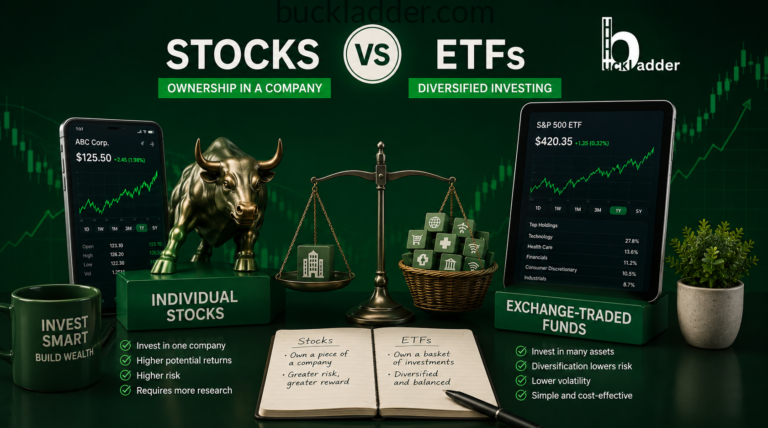
Bonds vs. Stocks
| Feature | Bonds | Stocks |
|---|---|---|
| Ownership | Loan to issuer | Ownership stake |
| Income | Interest payments | Dividends (optional) |
| Risk | Generally lower | Generally higher |
| Growth Potential | Moderate | Higher |
| Volatility | Lower | Higher |
| Priority in Bankruptcy | Higher | Lower |
Bond Funds vs. Individual Bonds
Individual Bonds
An individual bond is a single debt security issued by one borrower, such as a government or corporation. When you buy an individual bond, you are lending money to that specific issuer and typically know the bond’s coupon rate, maturity date, and face value in advance.
Advantages:
- Known maturity date
- Predictable payments
- Control over holdings
Disadvantages:
- Require research
- Less diversification
Bond Funds
A bond fund is a pooled investment that holds many different bonds in one portfolio. Instead of buying one bond directly, you buy shares of the fund, which may include government, municipal, or corporate bonds managed by a professional fund manager.
Advantages:
- Diversification
- Professional management
- Easy access
Disadvantages:
- No maturity date
- Returns vary with market conditions
How to Buy Bonds
Buying bonds is easier than many beginners expect, but the best place to buy depends on the type of bond you want and how hands-on you want to be.
Step 1: Define Your Goal
Determine whether you’re seeking:
- Income
- Stability
- Capital preservation
- Diversification
Step 2: Choose Bond Types
Select among:
- Government bonds
- Municipal bonds
- Corporate bonds
- Bond funds
Step 3: Evaluate Risk
Review:
- Credit ratings
- Yield
- Maturity
- Issuer strength
Step 4: Decide Where to Buy Bonds
There are several common places to buy bonds:
1. TreasuryDirect
If you want U.S. government securities such as Treasury bills, notes, bonds, or savings bonds, TreasuryDirect is the official government website. It allows investors to buy directly from the U.S. Treasury without going through a broker.
Best for:
- Treasury securities
- Savings bonds
- Investors who want direct government access
2. Brokerage Accounts
Most individual investors buy bonds through a brokerage account. Large online brokers often offer access to new bond issues and bonds trading in the secondary market.
Examples of brokerages include:
- Fidelity
- Charles Schwab
- Vanguard
- E*TRADE
- Merrill Edge
- Interactive Brokers
Best for:
- Corporate bonds
- Municipal bonds
- Treasury bonds
- Bond ETFs and mutual funds
Advantages:
- Easy to compare bonds
- Access to many issuers
- Can buy individual bonds or bond funds
3. Banks and Credit Unions
Some banks and credit unions offer access to certain bonds or bond-related products, though selection is usually more limited than at a brokerage.
Best for:
- Conservative investors
- Simple fixed-income products
- Investors who prefer working with a familiar institution
4. Bond Funds and ETFs
If you do not want to buy individual bonds, you can invest in bond mutual funds or bond ETFs through a brokerage account, retirement account, or robo-advisor.
Best for:
- Diversification
- Beginners
- Investors who want professional management
5. Financial Advisors
A financial advisor or wealth manager can help you choose bonds that match your goals, risk tolerance, and tax situation.
Best for:
- Larger portfolios
- Tax-sensitive investors
- People who want personalized guidance
6. Secondary Market Platforms
Some brokers and fixed-income platforms allow you to buy bonds that were previously issued and are now being resold by other investors.
Best for:
- Investors looking for specific maturities
- Those seeking potentially discounted prices
- Buyers who want more choice than a new-issue market alone
Step 5: Place the Order
When buying a bond, you will usually need to review:
- Issuer name
- Coupon rate
- Maturity date
- Credit rating
- Price
- Yield to maturity
- Minimum purchase amount
For individual bonds, many brokers quote prices in increments of $1,000 face value.
Timeline: Learning and Investing in Bonds
Week 1
- Learn bond basics
- Understand yields and maturity
Week 2
- Research bond categories
- Compare risk levels
Week 3
- Open a brokerage account
- Explore bond funds and ETFs
- Compare TreasuryDirect with brokered bond purchases
Week 4
- Make first bond investment
- Establish portfolio allocation
Real-World Example
Imagine two investors:
Investor A
100% stocks
During a market crash:
- Portfolio declines 30%
Investor B
60% stocks, 40% bonds
During the same crash:
- Portfolio declines 18%
While bonds may not eliminate losses, they often help cushion severe market declines.
Common Bond Investing Mistakes
Chasing Yield
Higher yields often mean higher risk.
Ignoring Inflation
A bond paying 3% isn’t attractive if inflation is 5%.
Lack of Diversification
Holding only one issuer increases risk.
Not Understanding Duration
Long-term bonds can experience significant price fluctuations when rates rise.
Are Bonds Worth It?
Bonds May Be Worth It If You:
✓ Want steady income
✓ Prefer lower volatility
✓ Need diversification
✓ Are approaching retirement
✓ Want to preserve capital
Bonds May Be Less Attractive If You:
✗ Seek maximum growth
✗ Have a long investment horizon
✗ Can tolerate significant market volatility
Future Outlook for Bonds
The bond market remains one of the largest financial markets in the world. Interest rates, inflation, and central bank policies continue to influence bond returns.
As investors navigate economic uncertainty, bonds are likely to remain an important tool for balancing risk and generating income.
Rather than viewing bonds as “boring investments,” many successful investors consider them a critical component of a well-diversified portfolio.
Final Thoughts
Bonds play a unique role in investing by providing income, stability, and diversification. While they may not offer the explosive growth potential of stocks, they can help reduce risk and create a more balanced portfolio.
For many investors, the question isn’t whether to own bonds—but how much of their portfolio should be allocated to them. Understanding how bonds work is the first step toward making informed investment decisions and building long-term financial security.