
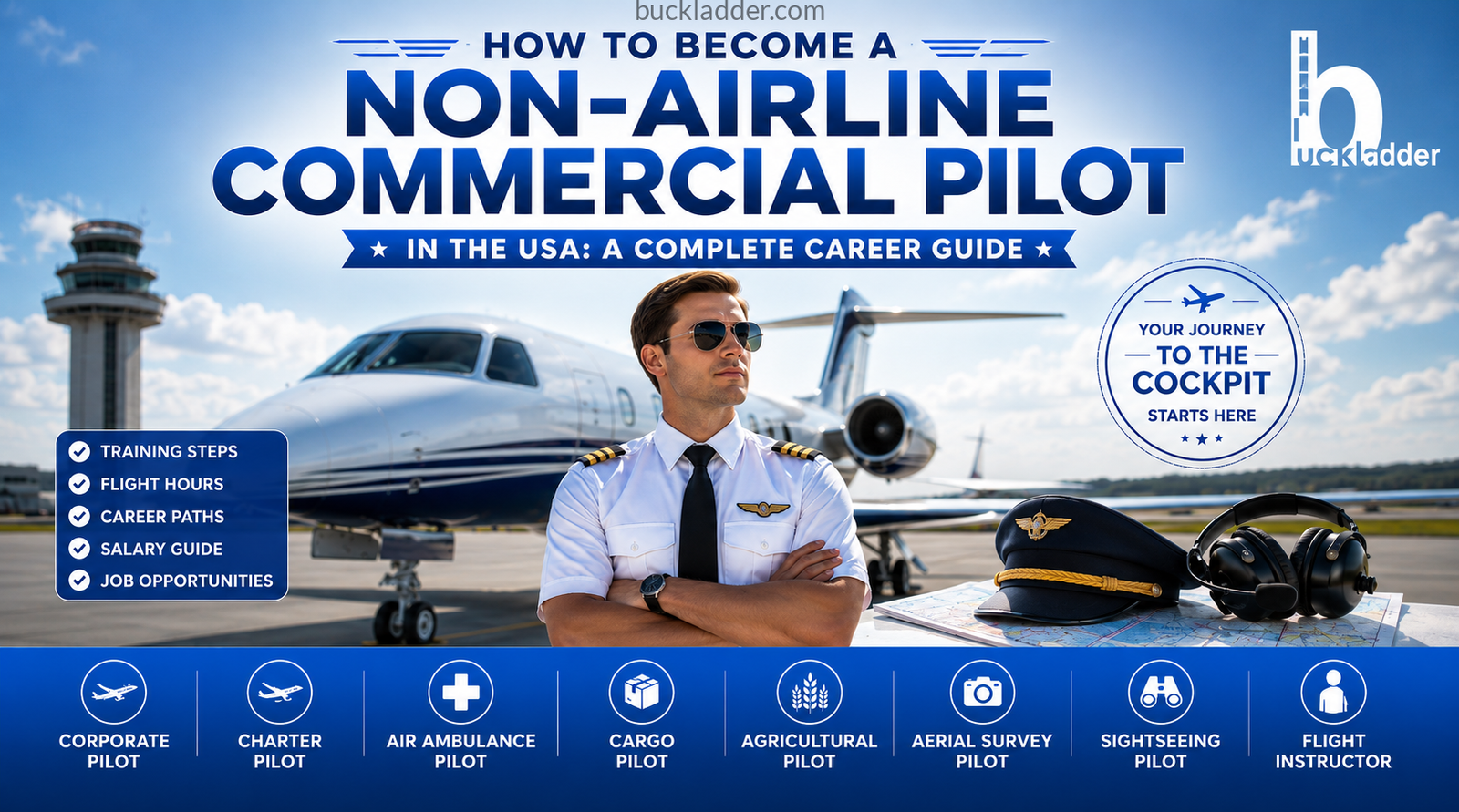
How to Become a Non-Airline Commercial Pilot in the USA: A Complete Career Guide
For many people, flying an aircraft for a living is a dream career. While most aspiring pilots think of major airlines, there are numerous opportunities outside the airline industry that offer exciting work, competitive salaries, and diverse flying experiences. Non-airline commercial pilots operate charter flights, corporate jets, cargo aircraft, agricultural planes, sightseeing tours, medical transport aircraft, and more.
If you’re passionate about aviation but don’t necessarily want to work for an airline, this guide explains how to become a non-airline commercial pilot in the United States.
What Is a Non-Airline Commercial Pilot?
A non-airline commercial pilot is a licensed pilot who is paid to operate aircraft outside of scheduled airline operations.
Common types of non-airline commercial pilot jobs include:
- Corporate jet pilot
- Charter pilot
- Air ambulance pilot
- Cargo pilot
- Agricultural pilot (crop dusting)
- Aerial survey pilot
- Firefighting pilot
- Sightseeing tour pilot
- Flight instructor
- Private aircraft pilot
These careers often provide greater variety and flexibility than traditional airline flying.
Why Choose a Non-Airline Pilot Career?
Many pilots prefer non-airline aviation because it offers unique advantages:
Diverse Flying Opportunities
You may fly different aircraft types and operate in a variety of environments.
Flexible Career Paths
Pilots can specialize in business aviation, cargo operations, emergency medical services, or aerial photography.
Potentially High Earnings
Experienced corporate and charter pilots can earn six-figure salaries.
No Airline Seniority System
Unlike airline pilots, many non-airline pilots advance based on experience and skills rather than seniority.
Step 1: Meet Basic Eligibility Requirements
Average Time: 1–4 Weeks
To begin flight training in the United States, you generally must:
- Be at least 17 years old for a private pilot certificate
- Read, speak, write, and understand English
- Meet FAA medical requirements
- Possess a valid government-issued identification
Strong communication skills and good health are important for aviation careers.
During this stage, you’ll typically schedule and complete an FAA medical examination and gather any required documentation. Most aspiring pilots can complete this step within a few weeks.
Step 2: Obtain a Private Pilot Certificate
Average Time: 3–6 Months
The first major milestone is earning a private pilot certificate.
Training typically includes:
- Flight instruction
- Ground school
- Aircraft systems
- Navigation
- Weather theory
- Aviation regulations
Most students complete between 40 and 70 flight hours before obtaining their private pilot certificate.
A private pilot certificate allows you to fly aircraft but not receive compensation for flying services.
The timeline depends on how frequently you train. Students who fly several times per week often finish in three to four months, while part-time students may take six months or longer.
Step 3: Earn an Instrument Rating
Average Time: 2–4 Months
An instrument rating enables pilots to fly using cockpit instruments during low visibility and challenging weather conditions.
Training covers:
- Instrument navigation
- Air traffic control procedures
- Weather interpretation
- Advanced flight planning
Most professional aviation jobs require an instrument rating.
Pilots who train consistently can complete this rating in as little as two months, while others may take longer depending on scheduling and weather conditions.
Step 4: Obtain a Commercial Pilot Certificate
Average Time: 6–12 Months
The commercial pilot certificate allows you to be paid for flying.
Requirements generally include:
- Minimum flight hour requirements established by the FAA
- Advanced flight maneuvers
- Cross-country flying experience
- Commercial pilot knowledge examination
- Practical flight test
This certification transforms aviation from a hobby into a professional career opportunity.
Many pilots spend several months building the required flight hours before qualifying for the commercial pilot checkride. The exact timeline depends on how often you fly and whether you’re training full-time or part-time.
Step 5: Build Flight Experience
Average Time: 1–3 Years
Many commercial pilot positions require additional flight hours beyond the minimum certification requirements.
Common methods for building experience include:
Flight Instructor
Many pilots become certified flight instructors to gain valuable flight hours while earning income.
Banner Towing
Flying advertising banners behind aircraft.
Aerial Photography
Conducting photography and surveying missions.
Pipeline and Powerline Patrol
Monitoring infrastructure from the air.
Sightseeing Tours
Providing scenic flights for tourists.
These jobs help pilots gain experience and qualify for higher-paying opportunities.
Many employers prefer pilots with 500 to 1,500 or more flight hours. Building these hours often takes one to three years, depending on the type of flying job and how frequently you fly.
Step 6: Obtain Additional Ratings and Certifications
Average Time: 1–12 Months (Depending on Rating)
Depending on your career goals, additional certifications may improve employment opportunities.
Popular ratings include:
Multi-Engine Rating
Allows pilots to operate aircraft with multiple engines.
Typical Time: 1–4 weeks
Certified Flight Instructor (CFI)
Enables pilots to teach student pilots.
Typical Time: 2–4 months
Airline Transport Pilot (ATP) Certificate
Although commonly associated with airlines, ATP certification can also benefit corporate and cargo pilots.
Typical Time: Several weeks after meeting flight-hour requirements
Type Ratings
Required for specific aircraft models, particularly business jets.
Typical Time: 2–8 weeks per aircraft type
Additional certifications can significantly improve your earning potential and open doors to specialized aviation careers.
Popular Non-Airline Commercial Pilot Careers
Corporate Pilot
Corporate pilots fly executives and business professionals on private aircraft.
Typical salary:
$90,000–$250,000+ annually
Charter Pilot
Charter pilots transport clients on demand rather than operating scheduled routes.
Typical salary:
$60,000–$180,000+ annually
Air Ambulance Pilot
Medical transport pilots fly patients, medical personnel, and emergency supplies.
Typical salary:
$70,000–$150,000+ annually
Cargo Pilot
Cargo pilots transport freight and packages throughout the country.
Typical salary:
$70,000–$200,000+ annually
Agricultural Pilot
Agricultural pilots apply fertilizers, pesticides, and seeds to crops.
Typical salary:
$60,000–$150,000+ annually
How Long Does It Take to Become a Non-Airline Commercial Pilot?
The total timeline varies based on training frequency, finances, and career goals.
A typical progression looks like this:
| Step | Average Time |
|---|---|
| Meet Eligibility Requirements | 1–4 Weeks |
| Private Pilot Certificate | 3–6 Months |
| Instrument Rating | 2–4 Months |
| Commercial Pilot Certificate | 6–12 Months |
| Build Flight Experience | 1–3 Years |
| Additional Ratings | 1–12 Months |
Total Time to Become Employable: Approximately 1.5–4 years
Pilots pursuing full-time training may reach commercial pilot status in about one year, while those training part-time often take longer.
How Much Does Pilot Training Cost?
Flight training costs vary significantly depending on location, aircraft type, and training pace.
Estimated costs include:
| Certification | Estimated Cost |
|---|---|
| Private Pilot Certificate | $10,000–$20,000 |
| Instrument Rating | $8,000–$15,000 |
| Commercial Pilot Certificate | $20,000–$40,000 |
| Additional Ratings | $5,000–$30,000+ |
Many pilots invest between $50,000 and $100,000+ to reach professional flying qualifications.
Skills Needed for Success
Successful commercial pilots possess:
- Excellent decision-making abilities
- Situational awareness
- Communication skills
- Technical aptitude
- Attention to detail
- Stress management skills
- Strong safety mindset
Pilots are responsible for passenger safety and must remain calm under pressure.
Career Outlook
Demand for qualified pilots continues to grow due to increasing air travel, pilot retirements, corporate aviation expansion, and cargo transportation needs.
Non-airline aviation sectors such as business aviation, charter services, emergency medical transport, and cargo operations continue to provide attractive career opportunities for skilled pilots.
Final Thoughts
Becoming a non-airline commercial pilot offers an exciting and rewarding career path for aviation enthusiasts. Whether your goal is flying corporate jets, medical aircraft, charter flights, or cargo planes, the journey begins with proper training, certification, and flight experience.
While obtaining the necessary licenses requires a significant investment of time and money, many pilots find the freedom, adventure, and earning potential well worth the effort. With dedication and continued skill development, a successful career in non-airline commercial aviation can be within reach.