Banking vs. Credit: What’s the Difference? A Complete Beginner’s Guide
Many people use the terms banking and credit interchangeably, but they are not the same thing.
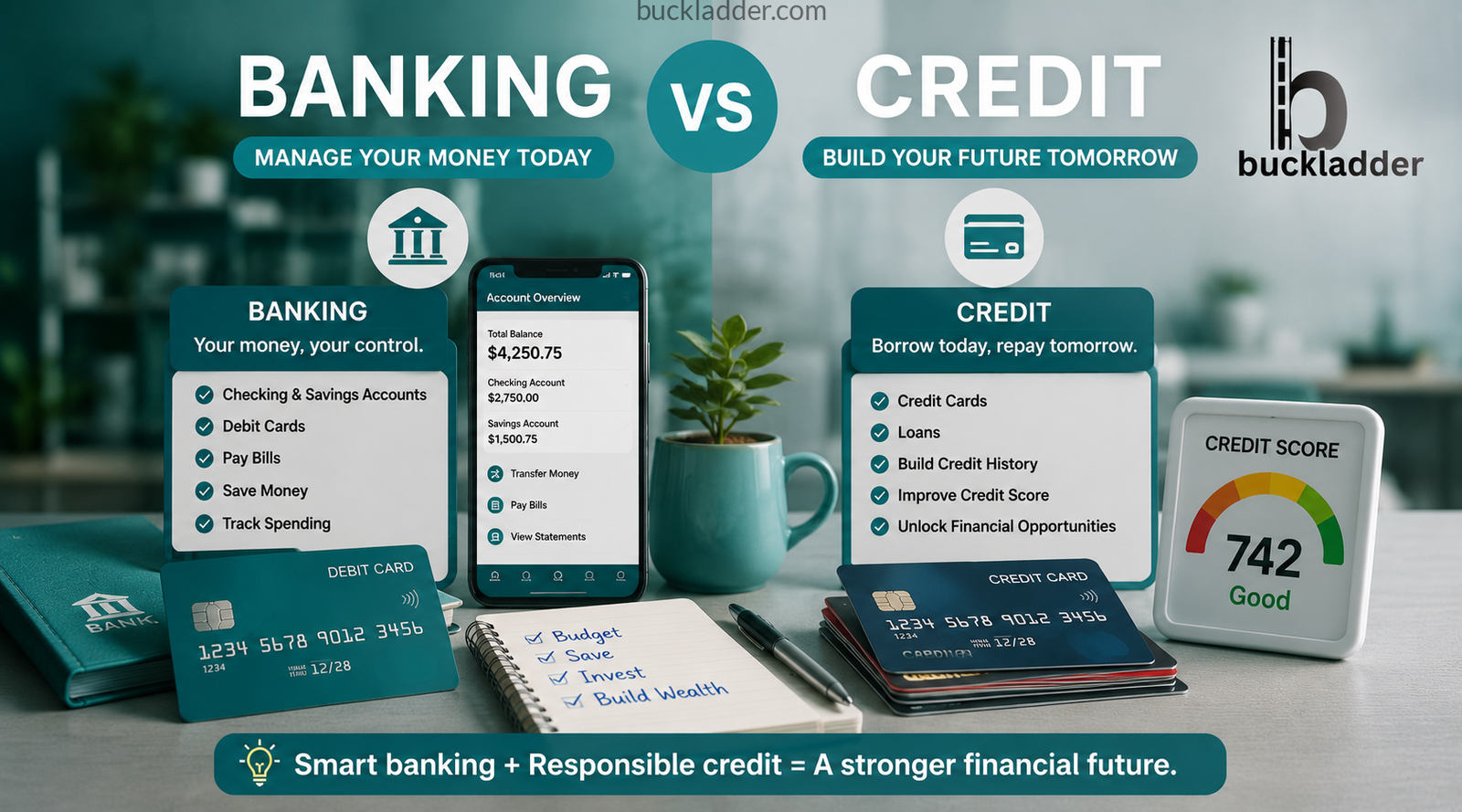
Banking helps you manage the money you already have.
Credit allows you to borrow money that you promise to repay later.
Understanding this simple difference can save you thousands of dollars over your lifetime and help you make smarter financial decisions.
Whether you’re opening your first bank account, applying for a credit card, or planning to buy a home someday, knowing how banking and credit work together is essential.
What Is Banking?
Banking refers to the services financial institutions provide to help people safely store, manage, transfer, and grow their money.
Common banking services include:
- Checking accounts
- Savings accounts
- Debit cards
- Online banking
- Mobile banking
- Direct deposits
- Wire transfers
- Money transfers
Think of a bank as your financial headquarters.
It is where your paycheck arrives, where your bills are paid, and where your savings are protected.
What Is Credit?
Credit is your ability to borrow money with the agreement that you’ll repay it later, usually with interest.
Examples include:
- Credit cards
- Car loans
- Mortgages
- Student loans
- Personal loans
- Lines of credit
Every time you borrow money, lenders evaluate whether they believe you’ll repay it responsibly.
This is where your credit history and credit score become important.
The easiest way to remember it is:
Banking manages today’s money.
Credit borrows tomorrow’s money.
How Banking and Credit Work Together
Although they’re different, banking and credit often work together.
For example:
You receive your salary through direct deposit into your checking account.
You use your credit card to buy groceries.
Later, you pay your credit card bill using money from your checking account.
Your bank helps manage your cash while your credit card helps you borrow short-term funds.
Responsible use of both builds financial stability.
Real-World Example
Imagine Sarah earns $4,000 every month.
Banking
Her paycheck is deposited into her checking account.
She pays:
- Rent
- Utilities
- Insurance
- Groceries
She also transfers $500 each month into her savings account.
Credit
Sarah uses her credit card for everyday purchases.
At the end of the month, she pays the entire balance before the due date.
Result:
- She avoids paying interest.
- She builds an excellent credit history.
- She earns rewards points.
- She keeps her finances organized.
This is how banking and credit are designed to work together.
Why Banking Is Important
Good banking habits help you:
- Protect your money
- Build savings
- Track spending
- Pay bills easily
- Receive income securely
- Prepare for emergencies
Without a bank account, managing your finances becomes much more difficult.
Why Credit Is Important
Good credit can help you:
- Buy a home
- Finance a vehicle
- Obtain lower interest rates
- Qualify for larger loans
- Rent an apartment
- Access better credit card rewards
Good credit can literally save tens of thousands of dollars over your lifetime.
Common Banking Mistakes
Many people make simple banking mistakes that reduce their financial security.
Examples include:
Spending Everything You Earn
Without savings, even small emergencies become financial crises.
Ignoring Bank Fees
Monthly maintenance fees, ATM fees, and overdraft charges can quietly drain your account.
Not Monitoring Your Accounts
Fraud and unauthorized transactions can go unnoticed if you never review your statements.
Common Credit Mistakes
Credit mistakes often become expensive.
Some of the biggest include:
Missing Payments
Late payments damage your credit score.
Maxing Out Credit Cards
High balances increase your credit utilization ratio.
Paying Only the Minimum
Minimum payments extend debt for years and increase interest costs.
Applying for Too Many Cards
Multiple hard inquiries in a short period may lower your credit score.
Banking vs. Credit: Which Is More Important?
This is like asking whether a car needs an engine or tires.
You need both.
Banking manages your daily financial life.
Credit helps you reach major financial goals.
Strong banking habits support responsible credit use, and responsible credit use creates future opportunities.
Timeline: Building Strong Banking and Credit Habits
Month 1
- Open a checking account.
- Open a savings account.
- Set up direct deposit.
Months 2–6
- Create a monthly budget.
- Build an emergency fund.
- Apply for your first credit card if appropriate.
Months 6–12
- Pay every bill on time.
- Keep credit card balances low.
- Track spending regularly.
Year 2+
- Build your credit score.
- Increase savings.
- Prepare for larger financial goals like buying a home.
Banking vs. Credit Comparison
| Feature | Banking | Credit |
|---|---|---|
| Main Purpose | Manage your money | Borrow money |
| Primary Tools | Checking, Savings | Credit Cards, Loans |
| Monthly Interest | Usually Earned | Usually Paid |
| Builds Credit Score | No | Yes |
| Helps With Daily Spending | Yes | Yes |
| Helps Buy Large Assets | Indirectly | Yes |
| Protection | Protected by banking regulations | Tracked through credit reports |
Is Learning About Banking and Credit Worth It?
Buck Ladder Score: 10/10 ⭐⭐⭐⭐⭐
Learning these skills early can:
- Reduce financial stress
- Save thousands in interest
- Improve financial confidence
- Increase borrowing opportunities
- Help build long-term wealth
Few financial skills provide a better return on your time.
Future Outlook
Banking continues to evolve with:
- Mobile banking apps
- Digital wallets
- Contactless payments
- Artificial intelligence
- Faster online lending
Meanwhile, credit remains one of the biggest factors influencing major financial decisions.
As financial technology grows, understanding both banking and credit will become even more valuable.
Key Takeaways
- Banking helps you manage the money you already own.
- Credit allows you to borrow money and repay it later.
- Banking and credit work best when used together.
- Responsible banking habits support financial stability.
- Responsible credit use builds opportunities for future borrowing.
- Understanding the difference between banking and credit is one of the first steps toward long-term financial success.
Mastering these two pillars of personal finance doesn’t require a finance degree—just consistent, informed habits. Start by managing your money well today, use credit responsibly, and you’ll build a stronger financial future one decision at a time.