
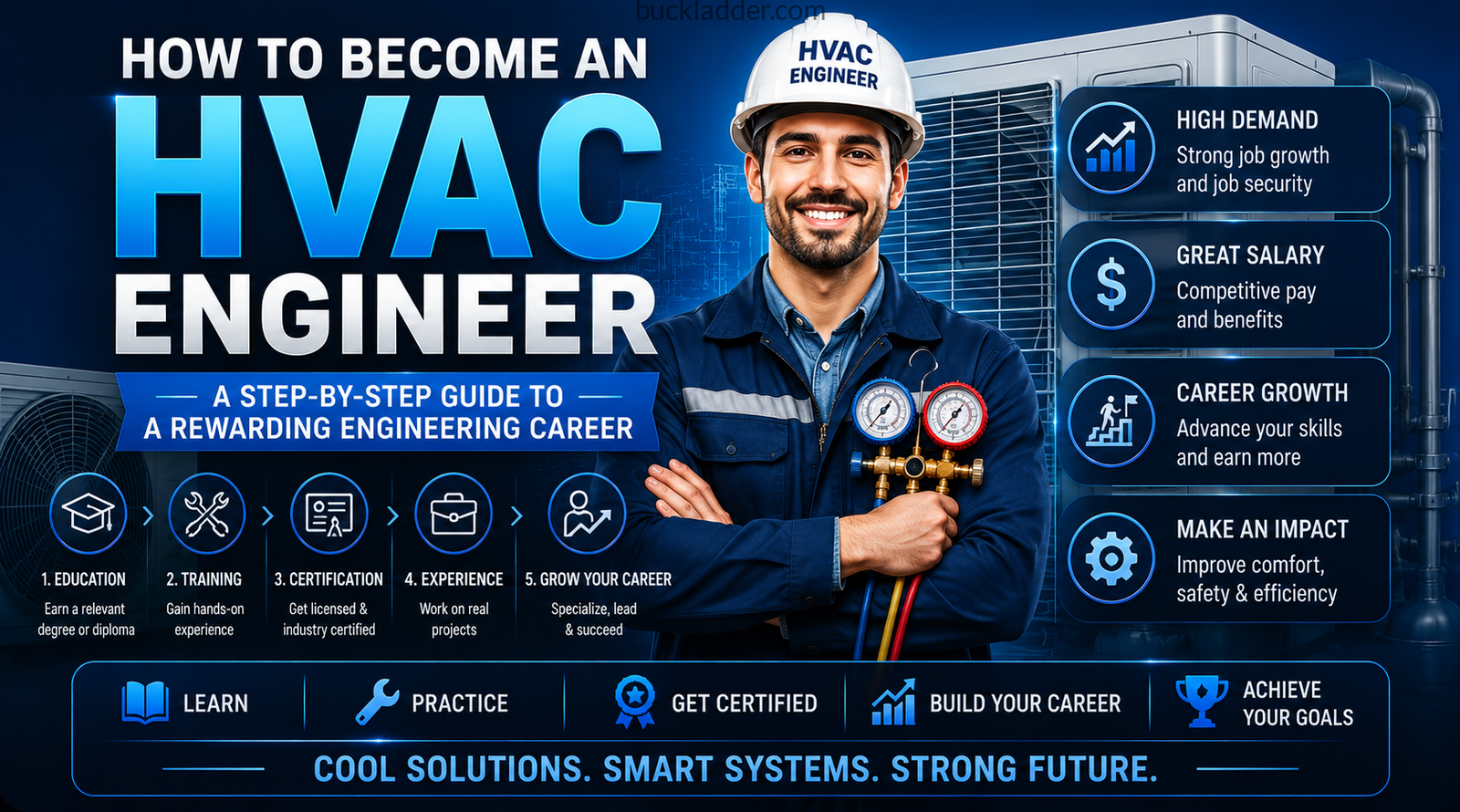
How to Become an HVAC Engineer: The Best Path for Every Age, Background, and Career Stage
Heating, Ventilation, and Air Conditioning (HVAC) engineering is one of the most overlooked careers in America. While software engineering and finance often dominate career conversations, HVAC engineers play a critical role in designing the systems that keep homes, offices, hospitals, factories, and data centers comfortable, safe, and energy efficient.
The field offers strong earning potential, stable demand, and multiple paths to entry. Whether you’re a high school student, a military veteran, a skilled tradesperson, or someone looking to change careers later in life, there is likely a route into HVAC engineering that fits your situation.
In this guide, you’ll learn:
- What HVAC engineers do
- Different paths into the profession
- The best route based on your age and circumstances
- Certifications worth pursuing
- Union opportunities and apprenticeships
- Schools and training programs
- Recommended books and resources
- How to land your first HVAC engineering job
What Does an HVAC Engineer Do?
HVAC engineers design, analyze, install, and optimize heating, cooling, ventilation, and refrigeration systems.
Their responsibilities often include:
- Designing HVAC systems for buildings
- Calculating heating and cooling loads
- Selecting equipment
- Improving energy efficiency
- Ensuring compliance with building codes
- Working with architects and construction teams
- Managing HVAC projects
Many HVAC engineers have degrees in mechanical engineering, though some begin as HVAC technicians and work their way into engineering and design roles.
According to the U.S. Bureau of Labor Statistics, mechanical engineers earned a median annual wage of more than $100,000 in 2024, and employment is projected to grow faster than average through 2034. HVAC technicians also enjoy strong demand, with approximately 40,100 openings projected annually.
Path #1: The Traditional Engineering Route
Best For
- High school students
- Recent graduates
- Individuals strong in math and science
- Those seeking maximum long-term earning potential
Step 1: Earn a Mechanical Engineering Degree
Most HVAC engineers begin with a bachelor’s degree in Mechanical Engineering.
Recommended subjects:
- Thermodynamics
- Fluid Mechanics
- Heat Transfer
- Engineering Design
- Building Systems
Recommended Schools
Look for ABET-accredited engineering programs.
Useful resource:
ABET Accredited Programs Database
Step 2: Join ASHRAE
The leading professional organization in the industry is ASHRAE.
Student memberships provide networking opportunities, scholarships, competitions, conferences, and discounted technical resources.
Step 3: Get an Internship
Target:
- Engineering consulting firms
- Construction companies
- Building automation firms
- Energy consulting firms
Step 4: Become an HVAC Design Engineer
Typical starting roles:
- Mechanical Engineer I
- HVAC Design Engineer
- Building Systems Engineer
- Energy Engineer
Path #2: HVAC Technician to HVAC Engineer
Best For
- Adults changing careers
- Skilled trades workers
- People who prefer hands-on work
- Individuals who cannot afford four years of college immediately
This is one of the most practical routes into HVAC engineering.
Step 1: Attend HVAC Trade School
Programs typically take:
- 6 months to 2 years
Focus on:
- Refrigeration
- Electrical systems
- Airflow
- Controls
- Troubleshooting
Step 2: Earn EPA 608 Certification
EPA 608 certification is required for technicians handling refrigerants in the United States. Many employers view it as a foundational credential.
Step 3: Work as an HVAC Technician
Many technicians gain:
- Installation experience
- Service experience
- Controls experience
- Project management experience
Step 4: Move into Design
Many employers will eventually support:
- Associate degree programs
- Bachelor’s degrees
- CAD training
- Engineering technology programs
This route often produces excellent HVAC engineers because they understand how systems perform in the real world.
Path #3: Community College Route
Best For
- Budget-conscious students
- Working adults
- Career changers
Community colleges often offer:
- HVAC Technology
- Mechanical Engineering Technology
- Building Systems Technology
Mechanical engineering technologists and technicians commonly enter the workforce with associate degrees or technical training.
After earning an associate degree, many students transfer into a four-year engineering program.
This can save tens of thousands of dollars compared to attending a university for all four years.
Path #4: Military-to-HVAC Engineer Route
Best For
- Veterans
- Active-duty service members transitioning to civilian careers
Military experience often translates well into:
- Mechanical systems
- Electrical systems
- Building maintenance
- Engineering support
Veterans can frequently leverage:
- GI Bill benefits
- Apprenticeships
- Engineering degree programs
Many employers actively recruit veterans because of their technical experience and discipline.
Path #5: Union Apprenticeship Route
Best For
- Individuals who want paid training
- Career changers
- People who prefer hands-on learning
- Those seeking strong wages and benefits
Many HVAC professionals enter the industry through union apprenticeship programs. Apprentices earn while they learn and receive classroom instruction alongside on-the-job training.
Benefits often include:
- Health insurance
- Pension plans
- Annuities
- Paid training
- Higher wages
- Job placement assistance
Common HVAC-related unions include:
UA (United Association)
The United Association represents:
- Pipefitters
- Steamfitters
- Refrigeration technicians
- HVAC service technicians
Many UA locals throughout the United States offer HVAC and refrigeration apprenticeship programs.
To join:
- Apply through your local union hall.
- Meet age and education requirements.
- Pass aptitude testing if required.
- Complete interviews.
- Enter the apprenticeship program.
Find local unions through:
SMART Union
SMART represents sheet metal workers who install and fabricate HVAC duct systems.
To join:
- Contact your local SMART chapter.
- Apply for apprenticeship openings.
- Complete training and classroom instruction.
Website:
International Union of Operating Engineers (IUOE)
Operating Engineers often work in:
- Commercial buildings
- Hospitals
- Universities
- Power plants
- High-rise facilities
Many building engineers and stationary engineers belong to IUOE locals.
Website:
Local 94 Operating Engineers (New York City)
One of the most respected HVAC-related unions in the country is Local 94 of the International Union of Operating Engineers.
Local 94 members typically operate and maintain:
- Commercial HVAC systems
- Boilers
- Chillers
- Building automation systems
- High-rise mechanical equipment
Members often work in:
- Manhattan office towers
- Hospitals
- Universities
- Government buildings
- Luxury residential buildings
Benefits may include:
- Excellent wages
- Pension plans
- Health coverage
- Continuing education
To pursue Local 94 opportunities:
- Monitor apprenticeship announcements.
- Obtain required certifications.
- Gain HVAC or building operations experience.
- Apply when recruitment periods open.
Website:
New York City Certificates of Fitness
Many HVAC and building engineers working in New York City obtain FDNY Certificates of Fitness.
Common certificates include:
Q-01 Refrigerating System Operating Engineer
Often required for individuals operating large refrigeration systems.
Q-99 Refrigerating System Operating Engineer
Used in certain facilities operating refrigeration equipment.
P-99 Low-Pressure Boiler Operator
Common in commercial buildings.
S-95 Fire Alarm Systems Supervisor
Frequently required in large facilities.
F-89 Fire and Life Safety Director
Often required for supervisory personnel in high-rise buildings.
Requirements vary depending on the certificate and may include:
- Exams
- Experience verification
- Employer sponsorship
- Continuing education
Visit:
for current requirements.
Certifications Worth Getting
Essential
EPA 608
Required for refrigerant handling.
Valuable
NATE Certification
Industry-recognized HVAC credential.
NATE certifications demonstrate competency in installation and service specialties.
HVAC Excellence
Widely respected technical certification program.
HVAC Excellence certifications are commonly recognized by employers throughout the industry.
OSHA 10 and OSHA 30
Many employers and unions require OSHA safety training.
These certifications demonstrate knowledge of workplace safety standards.
Building Automation Certifications
Building automation systems are becoming increasingly important.
Popular platforms include:
- Johnson Controls
- Siemens
- Honeywell
- Schneider Electric
Knowledge of controls can significantly increase earning potential.
Union Certifications and Licensing by State
Requirements vary by state and municipality.
Examples include:
New York
- EPA 608
- FDNY Certificates of Fitness
- OSHA Training
- Local licensing requirements
New Jersey
- HVACR Contractor License for business owners
- EPA 608
- Apprenticeship training
Massachusetts
- Refrigeration Technician License
- Refrigeration Contractor License
- Apprenticeship hours
California
- EPA 608
- State contractor licensing for business owners
- Union apprenticeship programs
Illinois
- Local licensing requirements
- EPA 608
- Union apprenticeship pathways
Always verify requirements with your state licensing board and local union hall.
Best Path by Age
Ages 16–22
Recommended Path:
Mechanical Engineering Degree + ASHRAE Membership + Internships
Alternative:
Union Apprenticeship + HVAC Training + Certifications
Both paths can lead to six-figure careers.
Ages 23–35
Recommended Path:
HVAC Trade School → EPA 608 → Technician Experience → Engineering Degree (if desired)
Alternative:
Union Apprenticeship → Journeyman Status → Building Engineer or HVAC Specialist
This allows you to start earning quickly while keeping future engineering opportunities open.
Ages 35–50
Recommended Path:
HVAC Technician → Building Automation → Project Management → Design Roles
Many successful HVAC professionals enter the field during mid-career transitions.
Ages 50+
Recommended Path:
Energy Auditing
Building Commissioning
HVAC Project Coordination
Facilities Management
These positions often rely more on experience than physical labor.
Does Sex, Race, or Background Matter?
Legally, hiring decisions should not be based on sex or race.
What matters most in HVAC engineering is:
- Technical competence
- Communication skills
- Problem-solving ability
- Certifications
- Work ethic
The industry needs more talent across all demographics and continues to face labor shortages in many areas.
Books Every Future HVAC Engineer Should Read
Beginner
- HVAC Fundamentals by Samuel Sugarman
- Refrigeration and Air Conditioning Technology
Intermediate
- Modern Refrigeration and Air Conditioning
- HVAC Equations, Data, and Rules of Thumb
Advanced
- ASHRAE Handbook Series
- Principles of Heating, Ventilation, and Air Conditioning
How to Get Your First HVAC Engineering Job
1. Learn AutoCAD and Revit
Many HVAC design firms expect familiarity with:
- AutoCAD
- Revit MEP
- Bluebeam
2. Join ASHRAE
Attend:
- Chapter meetings
- Conferences
- Technical seminars
Networking often leads to opportunities before jobs are publicly posted.
3. Build a Portfolio
Include:
- HVAC load calculations
- Sample duct layouts
- Energy models
- Revit projects
4. Apply to These Types of Companies
- MEP consulting firms
- Mechanical contractors
- Building automation companies
- Energy consulting firms
- Hospitals
- Universities
- Government agencies
- Commercial real estate firms
5. Use These Job Boards
- Indeed HVAC Engineering Jobs
- LinkedIn Jobs
- ASHRAE Career Center
- USAJobs
- Union apprenticeship websites
- Local union halls
Is HVAC Engineering a Good Career?
For many people, absolutely.
Pros:
- Strong salaries
- Stable demand
- Multiple entry paths
- Union opportunities
- Paid apprenticeships
- Strong benefits packages
- Growing focus on energy efficiency
- Opportunities for entrepreneurship
- Ability to work almost anywhere
Cons:
- Technical learning curve
- Continuing education requirements
- Some positions require extensive field work
- Licensing and certification requirements vary by location
If you enjoy solving problems, understanding how buildings work, and combining engineering with real-world applications, HVAC engineering can provide an excellent long-term career with strong earning potential, job security, and multiple pathways to advancement through engineering, union trades, facilities management, and building operations.