Stocks vs. Bonds: What’s the Difference? A Complete Beginner’s Guide to Choosing the Right Investment
When people first begin investing, one of the first questions they ask is:
“Should I invest in stocks or bonds?”
The answer depends on your financial goals, risk tolerance, investment timeline, and income needs.
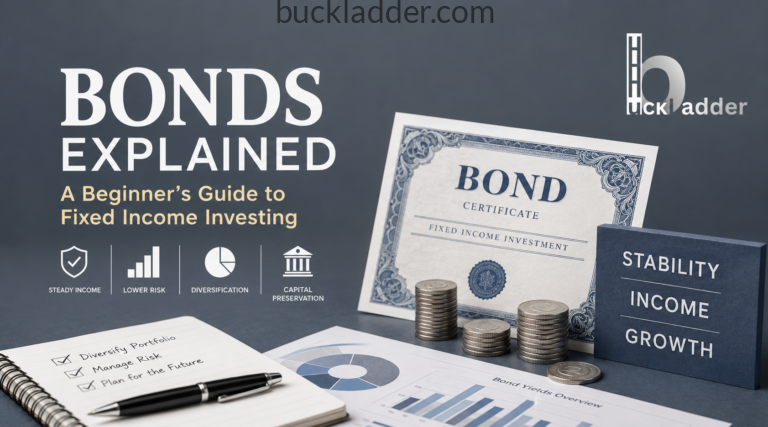
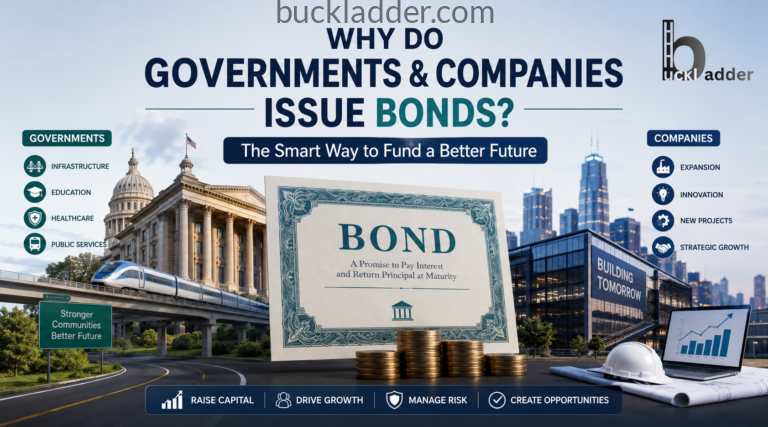
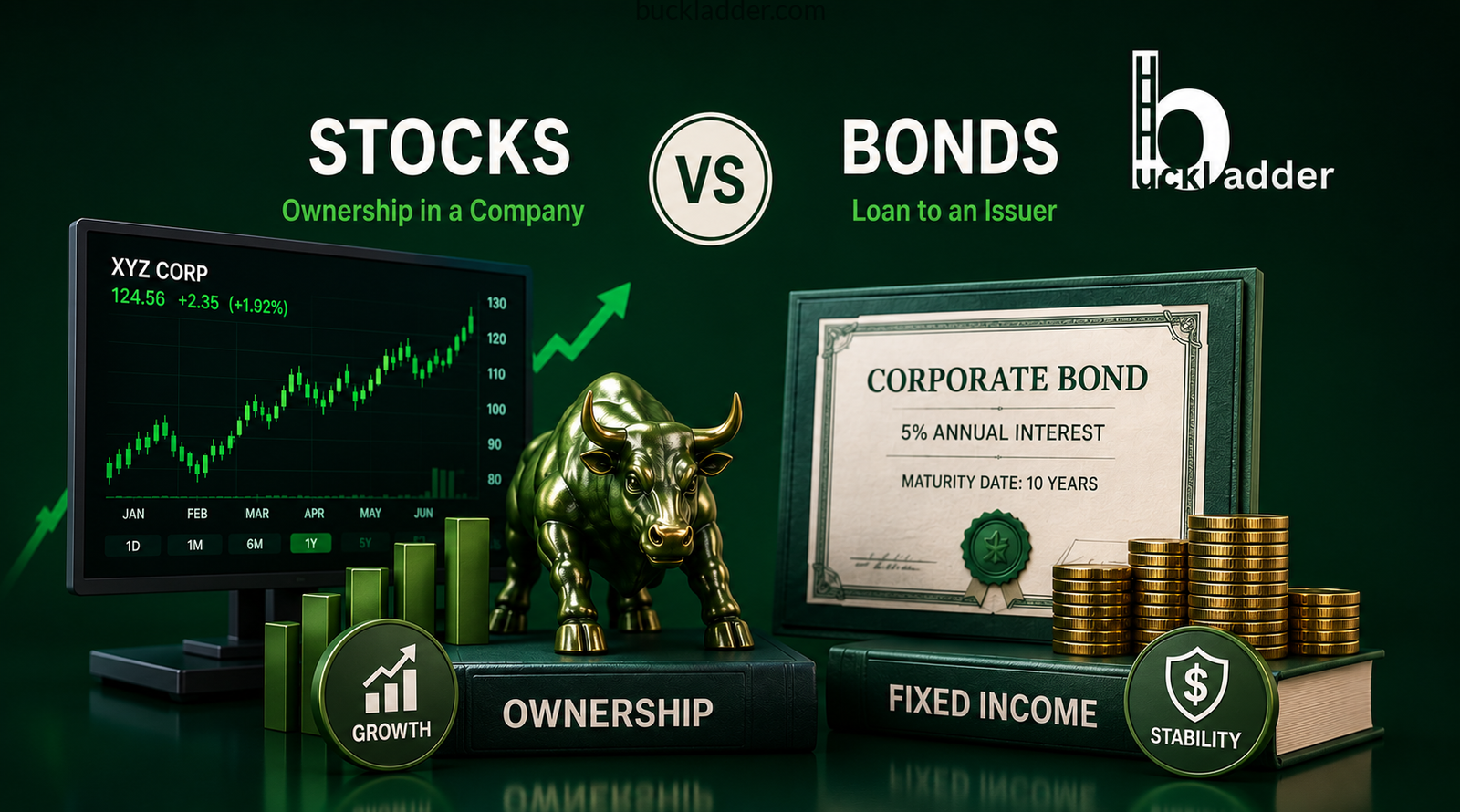
Stocks and bonds are two of the most common investment types, yet they serve very different purposes. Stocks offer ownership in a company and the potential for significant long-term growth, while bonds are loans made to governments or corporations that generally provide predictable income with lower risk.
Understanding how each works can help you build a balanced portfolio that matches your financial objectives.
What Are Stocks?
A stock represents partial ownership in a company.
When you buy a share of stock, you become a shareholder. If the company grows and becomes more profitable, your investment may increase in value. Some companies also share profits with investors through dividends.
Example
Imagine you purchase 100 shares of Company XYZ at $50 per share.
Investment:
100 × $50 = $5,000
If the share price later rises to $70, your investment becomes:
100 × $70 = $7,000
Capital gain:
$7,000 − $5,000 = $2,000
If the company also pays dividends, your total return could be even higher.
What Are Bonds?
A bond is essentially a loan.
Instead of buying ownership in a company, you’re lending money to a government, municipality, or corporation for a specified period.
In return, the issuer agrees to:
- Pay regular interest (coupon payments)
- Repay the original investment (principal) when the bond matures
Example
Suppose you purchase a $10,000 bond paying 5% annual interest for 10 years.
Each year you’ll receive:
$10,000 × 5% = $500
After 10 years:
- Total interest earned = $5,000
- Principal returned = $10,000
Total cash received = $15,000
The Fundamental Difference
The biggest distinction is simple.
Stocks
You become an owner.
Owners benefit when companies succeed.
Bonds
You become a lender.
Lenders receive interest regardless of whether the company grows quickly, provided the issuer remains financially healthy.
Comparing Stocks and Bonds
| Feature | Stocks | Bonds |
|---|---|---|
| Ownership | Yes | No |
| Income | Dividends (not guaranteed) | Fixed interest payments |
| Growth Potential | High | Low to Moderate |
| Risk | Higher | Lower |
| Volatility | High | Low |
| Voting Rights | Usually Yes | No |
| Maturity Date | None | Fixed maturity |
| Capital Appreciation | Significant potential | Limited |
| Best For | Long-term growth | Income and stability |
How Investors Make Money
Stocks
Investors earn money through:
1. Capital Appreciation
Buying low and selling higher.
2. Dividends
Some companies distribute a portion of profits to shareholders.
Bonds
Bond investors earn through:
Interest Payments
These payments are generally fixed and predictable.
Unlike stocks, bond prices usually don’t experience dramatic long-term appreciation.
Risk Comparison
Stock Risks
Stocks can be highly volatile.
Prices may decline because of:
- Poor earnings
- Recessions
- Interest rate changes
- Global events
- Investor sentiment
Some companies even go bankrupt.
Bond Risks
Although safer, bonds are not risk-free.
Risks include:
Interest Rate Risk
When interest rates rise, existing bond prices usually fall. This happens because new bonds are issued with higher yields, making older bonds with lower rates less attractive to buyers. Interest rates often rise when central banks increase benchmark rates to fight inflation or cool down a strong economy.
Inflation Risk
Inflation reduces purchasing power, which means your money buys less over time. Even if a bond pays a fixed return, rising prices can make that return less valuable in real terms.
Credit Risk
If the issuer cannot repay investors, losses may occur.
Government bonds are generally considered safer than many corporate bonds.
Historical Performance
Historically, stocks have delivered higher long-term returns than bonds.
Approximate long-term annual averages:
| Investment | Historical Average Return |
|---|---|
| Stocks | 8–10% |
| Bonds | 3–6% |
These figures vary depending on the market, time period, and specific investments.
Volatility Example
Suppose you invest $10,000.
Stocks
Year 1:
+25%
Portfolio:
$12,500
Year 2:
−20%
Portfolio:
$10,000
Large gains and losses are normal.
Bonds
Year 1:
+5%
Portfolio:
$10,500
Year 2:
+4%
Portfolio:
$10,920
Growth is slower but typically more stable.
Income Comparison
If your goal is regular income, bonds often have the advantage.
Example:
Investment:
$100,000
Stock Dividend Yield
3%
Annual income:
$3,000
However, dividends may be reduced or suspended.
Bond Yield
5%
Annual interest:
$5,000
Interest payments are generally fixed for the life of the bond.
Which Investment Fits Different Goals?
Young Investors
Usually benefit from higher stock allocations because they have time to recover from market downturns.
Older People/Retirees
Often allocate more to bonds because they provide income and reduce portfolio volatility.
Balanced Investors
Many investors choose a mix of both.
Example portfolio:
- 70% Stocks
- 30% Bonds
This balances growth potential with stability.
Diversification: Why Own Both?
Stocks and bonds often behave differently during changing economic conditions.
When stock markets struggle, high-quality bonds sometimes perform better. On the other hand, when stocks are doing well, the potential upside of your portfolio is higher.
Owning both can:
- Reduce volatility
- Smooth portfolio returns
- Lower overall risk
- Improve long-term consistency
Diversification doesn’t eliminate risk, but it can make investing less stressful.
Real-World Example
Imagine two investors each have $50,000.
Investor A
Invests everything in stocks.
Possible outcomes:
- Higher long-term returns
- Larger short-term swings
Investor B
Invests:
- $35,000 in stocks
- $15,000 in bonds
Possible outcomes:
- Slightly lower growth
- Better downside protection
- More stable portfolio
Both approaches can be appropriate depending on individual goals(long-term/short-term) and risk tolerance.
Common Beginner Mistakes
Believing Bonds Are Risk-Free
Bonds can lose value if interest rates rise or the issuer experiences financial trouble.
Avoiding Stocks Entirely
Many beginners miss long-term growth opportunities by staying only in low-risk investments.
Chasing High Returns
Buying investments solely because they recently performed well can increase risk.
Ignoring Asset Allocation
The mix of stocks and bonds often has a greater impact on long-term results than picking individual investments.
Timeline: Building a Balanced Portfolio
Step 1 (Week 1)
Define your financial goals.
Step 2 (Week 2)
Determine your investment timeline.
Step 3 (Week 3)
Assess your risk tolerance.
Step 4 (Week 4)
Choose an appropriate stock/bond allocation based on your goals.
Step 5 (Monthly)
Invest consistently.
Step 6 (Annually)
Review and rebalance your portfolio.
Is One Better Than the Other?
Not necessarily.
Each serves a different purpose.
Stocks
Best for:
- Long-term wealth building
- Younger investors
- Higher growth potential
Bonds
Best for:
- Income
- Capital preservation
- Lower volatility
- Near-retirement investors
For many people, combining both investments provides the best balance of growth and stability.
Stocks vs. Bonds Scorecard
| Category | Stocks | Bonds |
|---|---|---|
| Growth Potential | 10/10 | 5/10 |
| Income Stability | 6/10 | 10/10 |
| Risk Level | High | Low |
| Volatility | High | Low |
| Liquidity | High | Moderate |
| Inflation Protection | High | Moderate |
| Long-Term Wealth Building | 10/10 | 6/10 |
| Beginner Friendliness | 8/10 | 9/10 |
Frequently Asked Questions
Can I Lose Money in Bonds?
Yes. Bond prices can fall, and there is a risk that the issuer may default, especially with lower-quality bonds. The safest, highest-quality bonds are typically U.S. Treasury securities, such as Treasury bills, Treasury notes, and Treasury bonds, because they are backed by the full faith and credit of the U.S. government. Other high-quality options include investment-grade municipal bonds and top-rated corporate bonds, which generally have stronger credit ratings and lower default risk than lower-rated bonds. Even so, all bonds can be affected by interest rate changes, inflation, and market conditions.
Should Beginners Buy Stocks or Bonds?
Many beginners choose a diversified portfolio containing both. Younger investors often allocate more to stocks, while those closer to retirement may favor a higher proportion of bonds.
Are Bonds Safer Than Stocks?
Generally, yes. High-quality bonds are usually less volatile than stocks, but they are not completely risk-free.
Can I Invest in Both?
Absolutely. Most professionally managed retirement portfolios include both stocks and bonds to balance growth and risk.
Final Thoughts
Stocks and bonds are complementary investments rather than competitors. Stocks can provide the long-term growth needed to outpace inflation and build wealth, while bonds can add stability and generate dependable income. By understanding how each asset works and choosing an allocation that matches your goals, you can create a portfolio designed to weather market ups and downs while keeping you focused on your long-term financial plan.