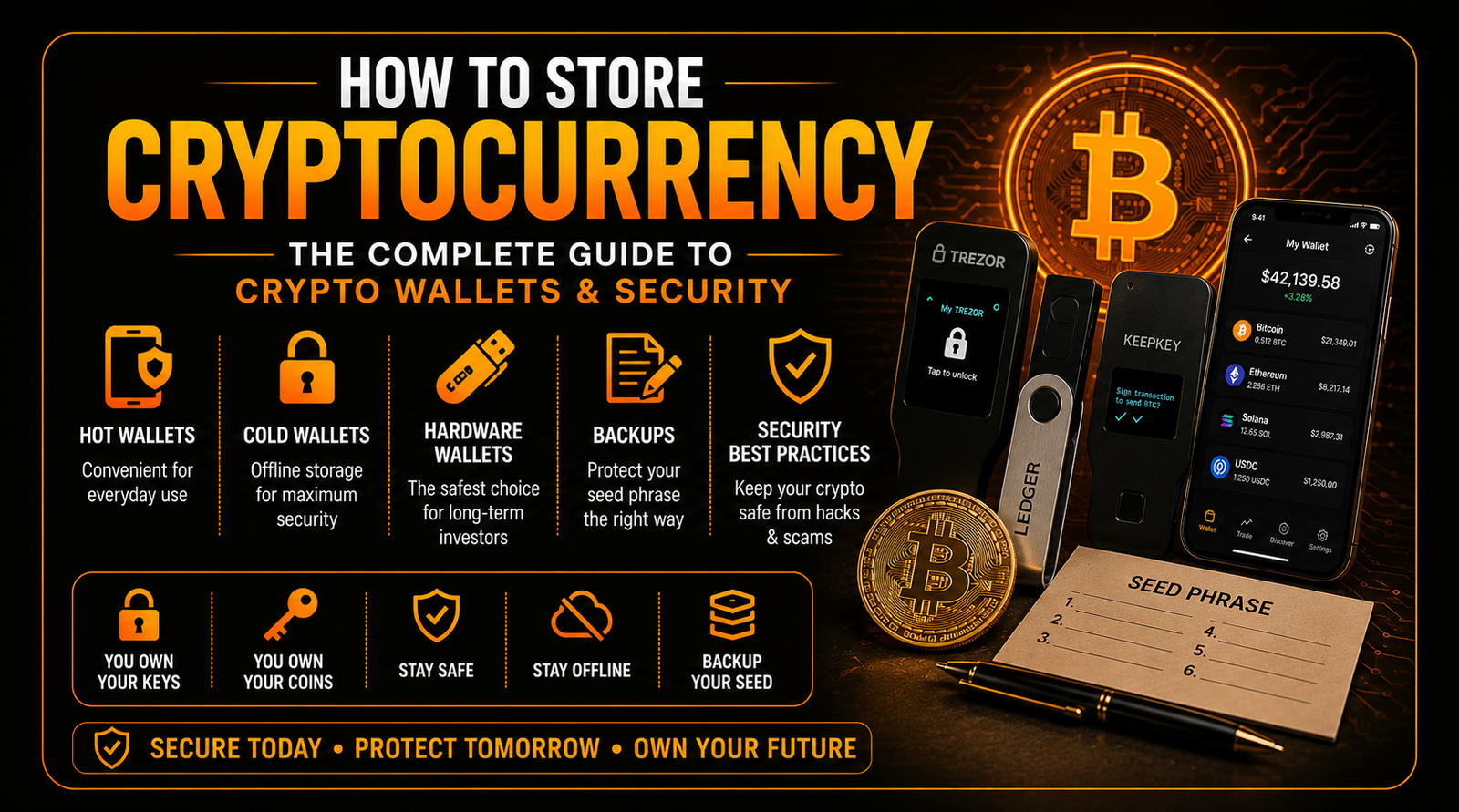
How to Store Cryptocurrency: A Complete Guide to Crypto Wallets, Security, and Protecting Your Digital Assets
Buying cryptocurrency is only half the battle.
The other half—and arguably the more important half—is storing it safely.
Since Bitcoin launched in 2009, billions of dollars worth of cryptocurrency have been lost due to hacks, scams, forgotten passwords, misplaced seed phrases, and poor security practices.
Unlike traditional bank accounts, there is usually no customer service department that can recover lost crypto. If access to your wallet is permanently lost, your cryptocurrency may be gone forever.
This makes storage one of the most important topics every crypto investor should understand.
Whether you’re buying your first Bitcoin or managing a diversified portfolio, here’s everything you need to know about storing cryptocurrency safely.
Why Crypto Storage Matters
Traditional financial assets are typically held by trusted institutions.
For example:
- Banks safeguard cash deposits.
- Brokerage firms hold stocks and bonds.
- Payment processors facilitate transactions between parties.
Cryptocurrency operates differently.
Ownership is determined by control of private keys.
A private key is essentially the password that proves ownership of your cryptocurrency.
Whoever controls the private keys controls the assets.
This creates tremendous freedom—but also tremendous responsibility.
The Golden Rule of Crypto Storage
One of the most famous sayings in crypto is:
“Not your keys, not your coins.”
This phrase means that if someone else controls your private keys, they ultimately control your cryptocurrency.
While many investors choose to leave assets on exchanges for convenience, long-term holders often prefer solutions that give them direct ownership.
The Two Main Categories of Crypto Storage
Every storage method falls into one of two categories:
Hot Storage
Hot wallets remain connected to the internet.
Examples include:
- Exchange wallets
- Software wallets
- Mobile wallets
- Desktop wallets
- Browser extension wallets
Cold Wallets
Cold wallets remain offline and are designed to maximize security.
Examples include:
- Hardware wallets
- Paper wallets
- Air-gapped wallets
The primary tradeoff is straightforward:
- Hot wallets prioritize accessibility and convenience.
- Cold wallets prioritize security and long-term protection.
1. Exchange Wallets
What Are Exchange Wallets?
Exchange wallets are custodial wallets provided by cryptocurrency exchanges.
When you purchase cryptocurrency on an exchange, the platform typically stores the assets on your behalf.
Popular examples include:
- Coinbase
- Kraken
- Binance
- Gemini
- Crypto.com
Advantages
- Simple setup process
- Beginner-friendly interface
- Password recovery options
- Integrated buying, selling, and trading features
Disadvantages
- The exchange controls the private keys
- Exchange hacks remain a possibility
- Platform insolvency can create risks
- Regulatory actions may affect account access
Best For
- New investors
- Small cryptocurrency holdings
- Active traders
2. Software Wallets
What Are Software Wallets?
Software wallets are non-custodial wallets installed on internet-connected devices.
They allow users to control their own private keys while maintaining convenient access to their cryptocurrency.
Popular examples include:
- Trust Wallet
- Exodus
- Phantom
- MetaMask
- Electrum
Advantages
- Full control of private keys
- Easy access to funds
- Support for decentralized applications
- Typically free to use
Disadvantages
- Exposure to internet-based threats
- Malware risks
- Device theft concerns
- Potential user errors
Best For
- Active cryptocurrency users
- DeFi participants
- NFT collectors
3. Mobile Wallets
What Are Mobile Wallets?
Mobile wallets are software wallets designed specifically for smartphones and tablets.
Popular examples include:
- Trust Wallet
- Coinbase Wallet
- Phantom
- BlueWallet
Advantages
- Convenient portability
- Fast transaction capability
- QR code support
- Easy access while traveling
Disadvantages
- Risk of phone theft
- Mobile malware threats
- Potential loss through accidental deletion
Best For
- Everyday cryptocurrency transactions
- Smaller balances
- Users who need frequent access
4. Desktop Wallets
What Are Desktop Wallets?
Desktop wallets are software wallets installed on personal computers.
Popular examples include:
- Electrum
- Sparrow Wallet
- Exodus
Advantages
- Greater control over wallet management
- Advanced features for experienced users
- Strong security when properly configured
Disadvantages
- Vulnerability to malware
- Risk of hardware failure
- Ongoing maintenance requirements
Best For
- Intermediate users
- Advanced cryptocurrency holders
- Users seeking additional wallet functionality
5. Browser Extension Wallets
What Are Browser Extension Wallets?
Browser extension wallets are software wallets that operate directly within a web browser.
They have become increasingly popular due to the growth of decentralized finance and Web3 applications.
Popular examples include:
- MetaMask
- Phantom
- Rabby
Advantages
- Easy integration with decentralized applications
- Fast transaction approvals
- Broad compatibility across blockchain ecosystems
Disadvantages
- Phishing attack risks
- Browser security vulnerabilities
- Exposure to malicious smart contracts
Best For
- DeFi users
- NFT traders
- Web3 participants
6. Hardware Wallets
What Are Hardware Wallets?
Hardware wallets are physical devices specifically designed to store private keys offline.
Many security professionals consider them the most secure option for long-term cryptocurrency storage.
Popular examples include:
- Ledger
- Trezor
- Coldcard
- Keystone
How They Work
Private keys remain stored inside the device and never leave it.
When a transaction is initiated, it is signed within the hardware wallet before being transmitted to the blockchain network.
This significantly reduces exposure to online threats.
Advantages
- Strong offline security
- Protection against malware
- Reduced exposure to hacking attempts
- Excellent long-term storage solution
Disadvantages
- Initial purchase cost
- Learning curve for new users
- Responsibility for safeguarding the physical device
Best For
- Long-term investors
- Large cryptocurrency portfolios
- Security-focused users
7. Paper Wallets
What Are Paper Wallets?
Paper wallets involve printing or writing wallet credentials and storing them physically.
Although they were once a popular cold storage method, they are less commonly used today.
Advantages
- Completely offline storage
- No exposure to electronic attacks
Disadvantages
- Vulnerability to physical damage
- Fire and water risks
- Greater likelihood of human error
Best For
- Users seeking basic offline storage
- Individuals comfortable managing physical backups
Most investors now prefer hardware wallets because they offer stronger security and easier usability.
8. Air-Gapped Wallets
What Are Air-Gapped Wallets?
Air-gapped wallets are cold wallets that never connect directly to the internet.
They typically use dedicated offline computers or specialized hardware devices.
Advantages
- Extremely high security
- Minimal online exposure
- Strong protection against remote attacks
Disadvantages
- More complex setup process
- Reduced convenience for frequent transactions
Best For
- Large cryptocurrency holdings
- Advanced users
- Maximum-security storage strategies
Understanding Seed Phrases
When creating a cryptocurrency wallet, users are typically provided with a recovery phrase, often called a seed phrase.
This phrase usually contains:
- 12 words
- 18 words
- 24 words
The seed phrase acts as the master backup for the wallet.
Anyone who possesses the seed phrase can access the associated funds.
Conversely, losing the seed phrase may result in permanent loss of access to the wallet.
How to Store Your Seed Phrase Safely
Protecting your seed phrase is one of the most important aspects of cryptocurrency security.
Use Multiple Backups
Create multiple copies and store them in separate secure locations.
Keep It Offline
Avoid storing seed phrases in cloud storage, email accounts, or digital notes.
Use Fireproof Storage
Protect physical backups from environmental damage whenever possible.
Consider Metal Backup Plates
Metal backup products provide additional durability and can resist:
- Fire
- Water
- Corrosion
Common Crypto Storage Mistakes
Leaving Large Holdings on Exchanges
While convenient, custodial storage increases reliance on third parties.
Storing Seed Phrases Digitally
Screenshots, cloud backups, and digital documents can become security vulnerabilities.
Falling for Phishing Attacks
Fraudulent websites and fake applications are common methods used by attackers.
Ignoring Security Updates
Outdated wallet software may contain known vulnerabilities.
Sharing Wallet Information
Legitimate companies and wallet providers will never ask for your seed phrase.
A Storage Strategy Based on Portfolio Size
Under $1,000
A reputable exchange wallet or software wallet may provide sufficient convenience and security.
$1,000 to $10,000
Consider using a non-custodial software wallet to maintain direct control of private keys.
$10,000 to $100,000
A hardware wallet becomes increasingly valuable as portfolio size grows.
$100,000+
Many investors combine multiple security measures, including:
- Hardware wallets
- Multi-signature wallets
- Geographic backup distribution
- Professional custody services
What Is a Multi-Signature Wallet?
A multi-signature wallet, often called a multisig wallet, requires multiple approvals before funds can be moved.
Examples include:
- 2 of 3 signatures required
- 3 of 5 signatures required
Benefits
- Enhanced security
- Reduced single-point-of-failure risk
- Improved inheritance and succession planning
Many long-term Bitcoin holders use multisig wallets to secure substantial holdings.
The Future of Crypto Storage
Cryptocurrency wallet technology continues to evolve.
Several emerging developments are shaping the future of digital asset security.
Smart Wallets
Advanced wallets that improve usability while maintaining strong security.
Social Recovery
Recovery systems that allow trusted contacts to assist with wallet restoration.
Biometric Authentication
Integration of fingerprint and facial recognition technologies.
Institutional-Grade Self-Custody
Enhanced self-custody solutions designed for businesses and large investors.
Multi-Chain Wallets
Wallets capable of managing assets across multiple blockchain networks from a single interface.
Final Thoughts
The greatest threat to your cryptocurrency may not be market volatility.
It may be inadequate storage and security practices.
Cryptocurrency gives individuals unprecedented control over their financial assets, but that control comes with responsibility.
The best storage solution depends on several factors, including:
- Portfolio size
- Technical expertise
- Investment goals
- Security requirements
For many investors, a balanced approach works best.
Use hot wallets for smaller amounts that require regular access, and store larger long-term holdings in secure cold wallets.
In the world of cryptocurrency, protecting your assets is just as important as selecting the right investments.